Pesticide contamination of groundwater
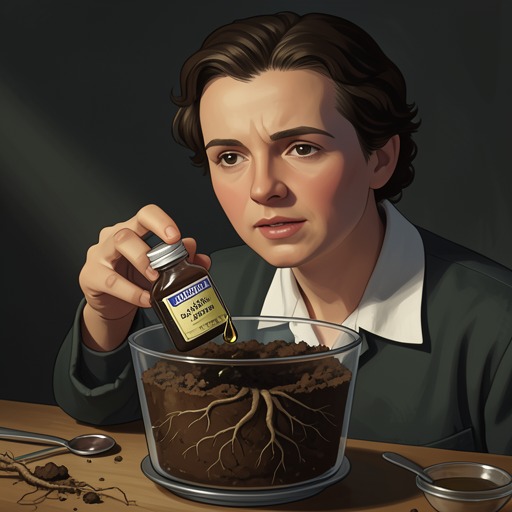
Silent SpringPesticide contamination of groundwater is a hidden, mobile form of pollution whose consequences cannot be confined to the place where chemicals first enter the land. Rain carries substances downward through soil and rock into groundwater, which moves through connected underground pathways before emerging at springs, feeding wells, or joining streams and rivers. The Rocky Mountain Arsenal case gives this broad warning a concrete history: wastes from a Colorado manufacturing site traveled underground to farms, where they poisoned wells, sickened people and livestock, and damaged crops.
A connected water system
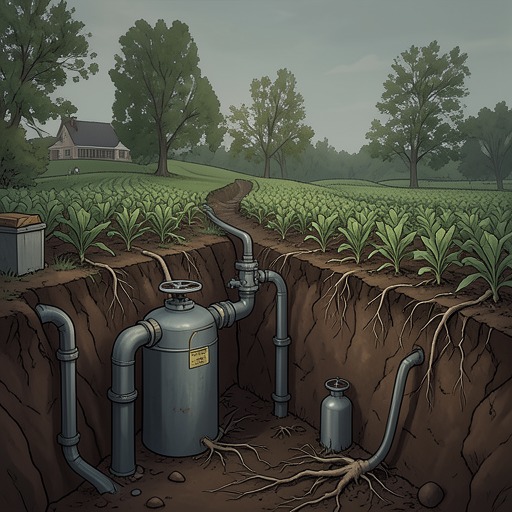
The account describes groundwater not as a set of sealed local reservoirs but as a moving underground body of water. Rain settles through pores and cracks in soil and rock until it reaches layers whose pores are filled with water. This subterranean supply may rise beneath hills and sink below valleys, following routes that are not visible at the surface. The movement can be extremely slow—sometimes no more than 50 feet in a year—or much faster, approaching a tenth of a mile in a day. Groundwater travels through unseen channels and may surface at a spring or be drawn up to supply a well. Much of it instead enters streams and, through them, rivers. The account emphasizes the connection between these underground and surface waters: apart from water entering streams directly as rain or runoff, the running water at the earth’s surface has at some point been groundwater. Contamination below ground therefore threatens more than a single well or parcel of land; it can reach the wider water system.
The Rocky Mountain Arsenal case
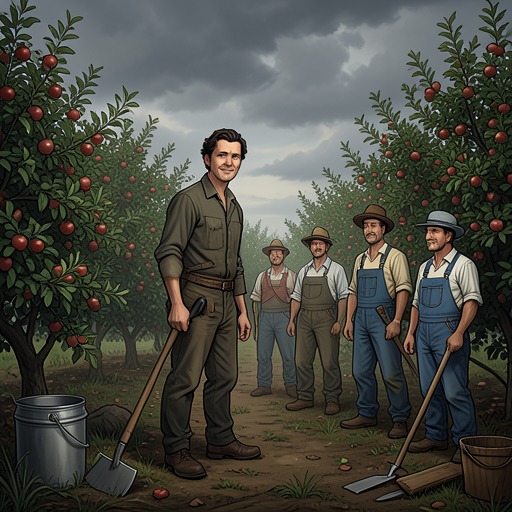
The Rocky Mountain Arsenal, operated by the Army Chemical Corps near Denver, began manufacturing war materials in 1943. During its years of operation, wastes including phosphoric acid, fluorides, and arsenic were discharged into holding ponds. The passage connects this industrial waste history to contamination of groundwater between the Arsenal and agricultural land several miles away. The underground journey was slow but consequential. It took an estimated seven to eight years for wastes to travel about three miles from the holding ponds to the nearest farm. By the time the contamination became apparent, the pathway was not a visible surface spill but groundwater moving beneath the intervening land. The seepage continued to spread, and the extent of the contaminated area was unknown in the account. The observed consequences reached beyond water quality. Wells were poisoned, people and livestock were sickened, and crops were damaged. The example makes groundwater pollution legible through its effects at the farm, while the route connecting the source and those effects remained hidden underground. The account warns that this episode might be only the first of many, framing the Arsenal case as an indication of a broader vulnerability rather than an isolated problem.
The scale and difficulty of the threat
The concern rests on the mismatch between where contamination begins and how far its effects can travel. Pollutants may enter groundwater at one location, then move through the subsurface before reaching a well or surface water elsewhere. Because groundwater can move slowly, the interval between disposal and harm may span years; because it also connects to streams and rivers, the eventual reach cannot be inferred from the original discharge site alone. This is why the account treats groundwater contamination as especially disturbing within the wider problem of water pollution. Nature does not keep water in closed, separate compartments. The Arsenal’s holding ponds, the groundwater beneath the farms, and the wells and waterways supplied by that water belong to one connected system. The pollution is difficult to recognize precisely because the connecting route is out of sight, but its consequences surface in ordinary necessities: drinking and farm water, livestock, crops, streams, and rivers.
Significance in Carson’s pesticide argument
Rachel Carson undertook the book that became Silent Spring in 1958, after a professional life as a marine biologist and writer with the U.S. Fish and Wildlife Service. She and her scientific colleagues had become alarmed by the widespread use of DDT and other persistent poisons in agricultural control programs. The Arsenal example extends the book’s concern with toxic substances beyond deliberate spraying: industrial wastes, too, can enter environmental systems and travel beyond the place where they were deposited. Carson initially tried to interest magazines in an article about the dangers she saw, but publishers feared losing advertising and turned her down. The groundwater case belongs to the book’s larger challenge to the idea that chemical use can be considered locally contained. Its movement through soil, rock, wells, and waterways makes the central relationship concrete: water is connected, and contamination in one part of that system can become a danger elsewhere.